

The Origins of Visionary Art in Los Angeles
How mystics, occultists, swamis, and seekers helped shape L.A.’s visionary art tradition.
In 2009, the Los Angeles Conservancy and its Modern Committee examined LA’s unique religious heritage with a one-day tour of five spiritual institutions. The self-driving sojourn was called City of the Seekers: LA’s Unique Spiritual Legacy, and it brought much-needed attention to Southern California’s role in the founding of 20th-century fringe religious institutions. It also helped shed light on the way spiritual freedom in Southern California has enabled artists to make visionary work as part of their creative practices.
Inspired by the Los Angeles Conservancy’s project and a spiritual-themed adventure from LA’s own offbeat tour company, Esotouric, I decided to pitch a regular column to VICE back in 2016. The column, appropriately titled "City of the Seekers,” profiled over 50 subjects and examined how Southern California allowed creative people to make art as an expression of their spirituality.
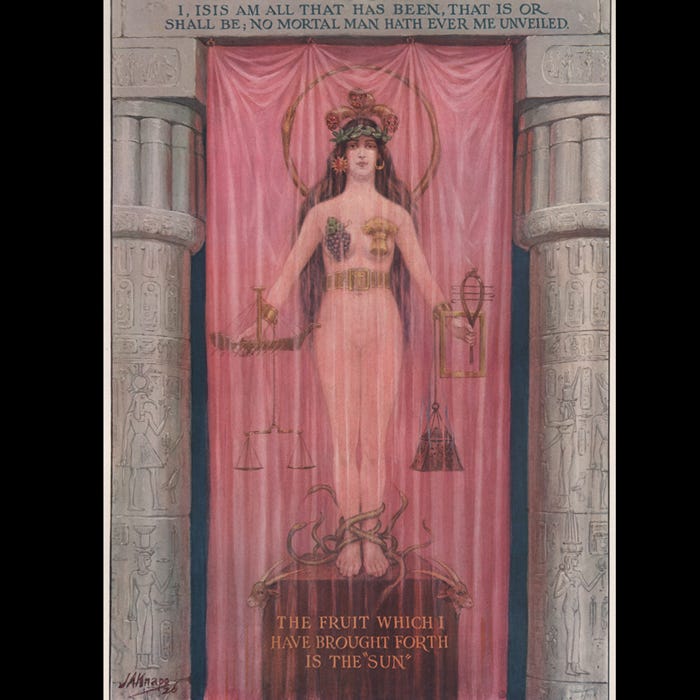
In 1928, mystic, lecturer, and occult book-collector Manly P. Hall published The Secret Teachings of All Ages, a dazzling encyclopedic compendium of ancient texts, esoteric traditions, and musings on metaphysics that became a landmark work, with help from the incredibly detailed and visually striking illustrations by J. Augustus Knapp. (Knapp, a Kentucky native, also created a tarot deck with Hall.) Manly P. Hall founded the Philosophical Research Society in the 1930s, and through the artful marriage of images and words, the derided but nevertheless important New Age movement continued to grow in Southern California.
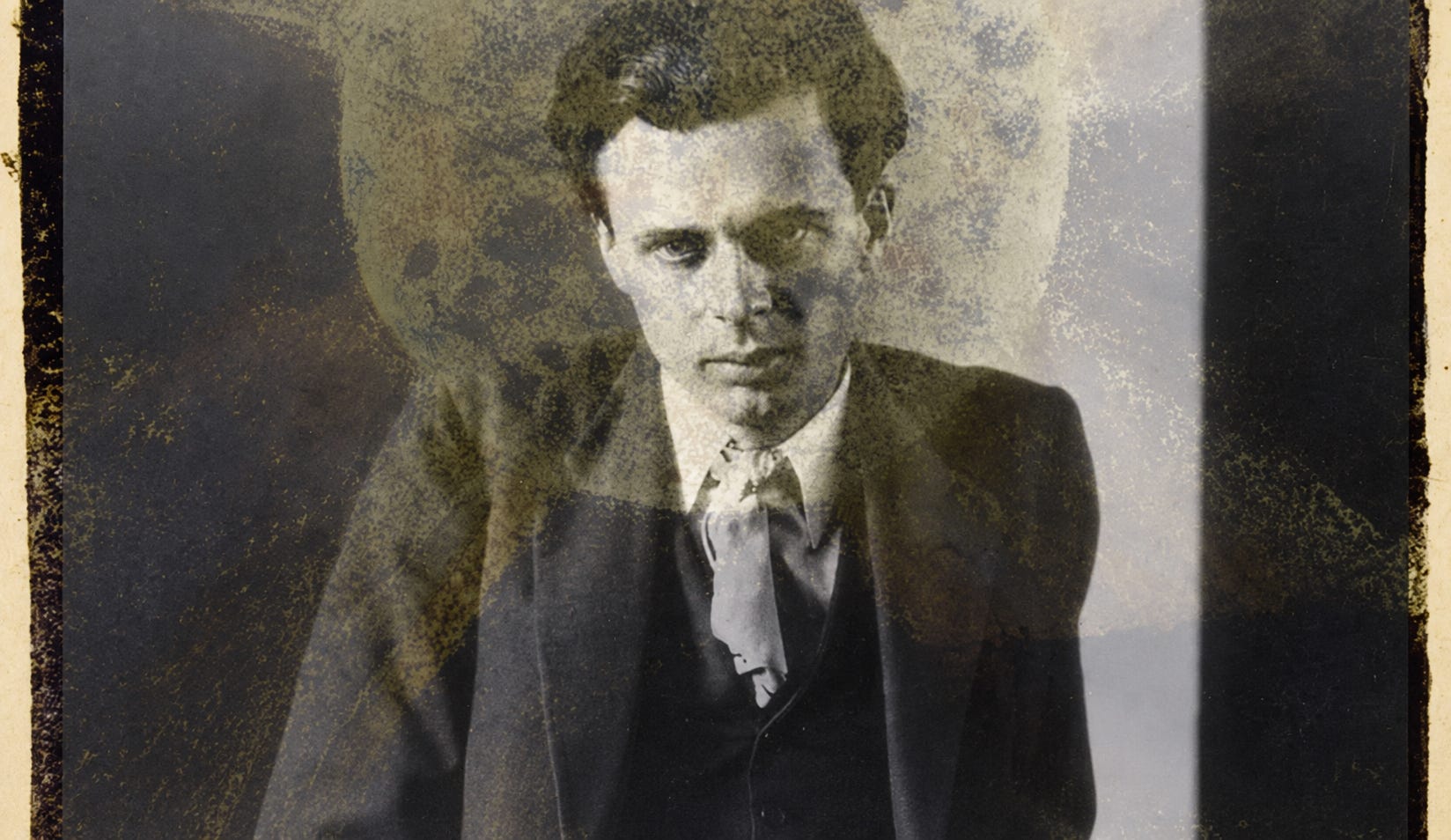
Meanwhile, many other broad-minded people made their way out West, too. Many settled north, as LA was still just known as a frenzied free-for-all feeding off the nascent film industry. Nonetheless, captivating spiritual thinkers such as Annie Besant and later Aldous Huxley helped shape Southern California’s esoteric landscape, with the Theosophical Society establishing Krotona in Hollywood and Vedanta circles inspiring Huxley’s work.
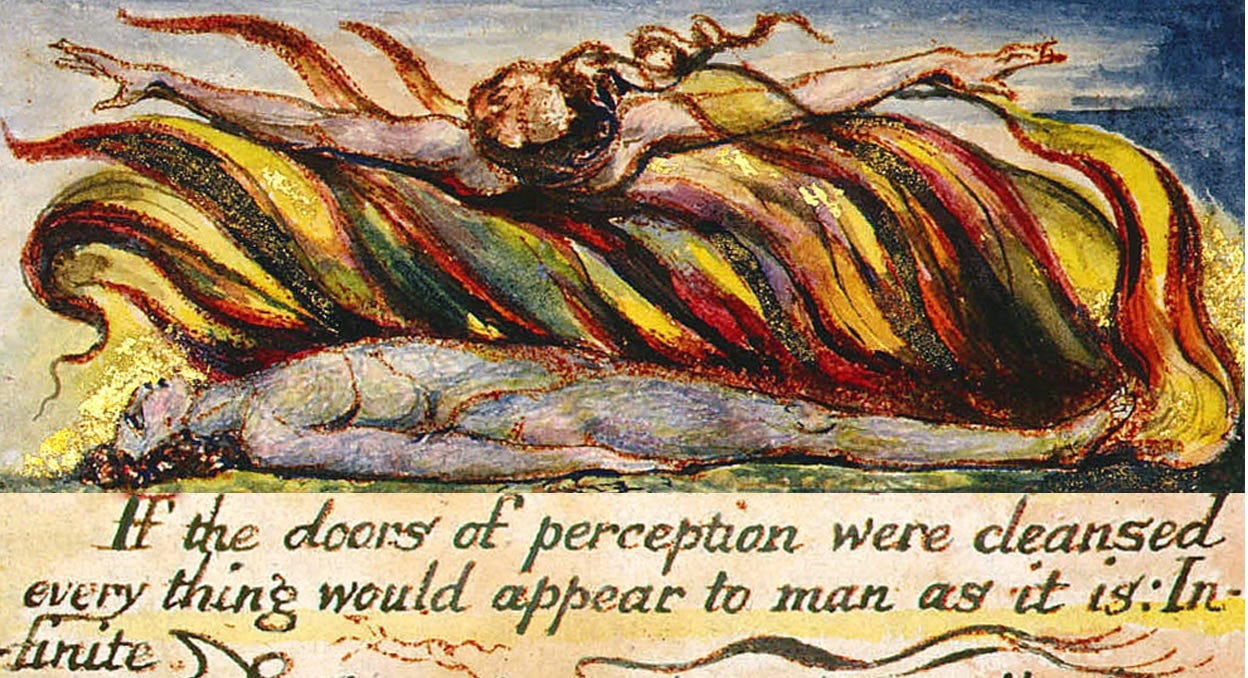
Like Manly P. Hall, Huxley fell in love with the freedom that the rapidly developing area offered. Mirroring Hall’s DIY approach to crafting his own credo, Huxley set out to find his own brave new world in the City of Angels, quoting a line from the late-18th-century artist and writer William Blake’s The Marriage of Heaven and Hell in his slim volume, The Doors of Perception, published in 1954. The book describes Huxley’s experience with mescaline, which would in turn inspire the name of the band, The Doors.
Between 1941 and 1960, Huxley penned countless pieces for a periodical published by the Vedanta Society of Southern California. Vedanta is one of the six classical schools of Hindu philosophy, and in turn has spawned several of its own offshoots. In the Golden State, it was Advaita Vedanta, as interpreted by Indian mystic and yogi Ramakrishna, that flourished. Ramakrishna’s yoga-infused philosophies continue to help define the Vedanta way of life in Southern California.
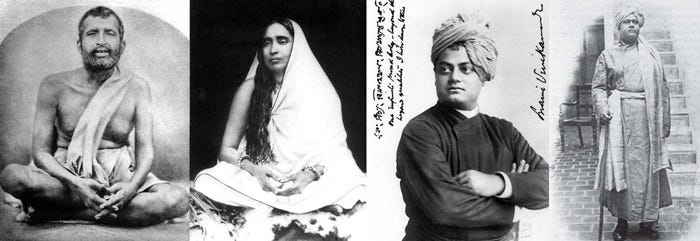
In the great succession of swamis, it was Prabhavananda who inspired author Christopher Isherwood, philosopher Gerald Heard, and Aldous Huxley. Today, the art of portrait photography and painting remain very important to the Vedanta Society. Take, for example, Swami Tadatmananda—born in 1932 in Detroit, Michigan as John Markovich—who joined the Vedanta Society of Southern California in 1959. Until his passing in 2008, he painted portraits and landscapes as a material representation of his own spirituality.
In Los Angeles, visionary/visual art had officially taken root, but its original purpose may not have been to hang on the walls of patrons. For much of the first part of the century in LA, it seems art was generally not made to be exhibited, but rather it was generated as part of one’s spiritual expression through creativity and vice versa, as well as a way to relay information and illustrate arcane texts and sacred images such as the ones at Manly P. Hall’s Philosophical Research Society.
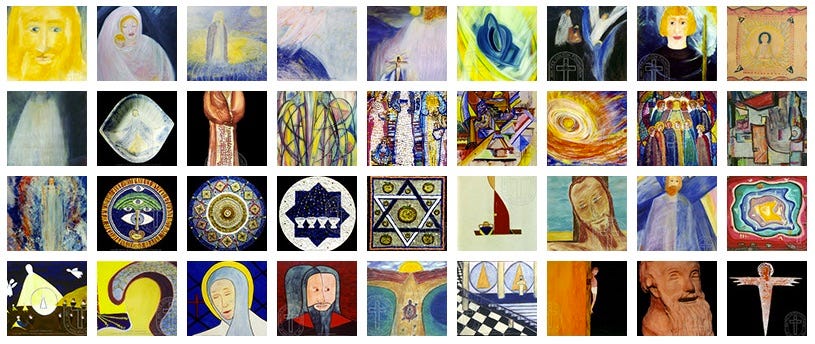
Another stop on the “City of the Seekers” tour was a campus in the bucolic LA suburb of Glendale, where Ann Ree Colton established the spiritual foundation of Niscience, which means “knowing.” Inspired by its namesake’s early gifts as a dream analyst, clairvoyant, and healer, the Ann Ree Colton Foundation of Niscience, Inc. takes a highly non-traditional approach to Christian teachings that likely wouldn’t fly anywhere else in the country but Glendale. Not surprisingly, for Niscience co-founder Jonathan Murro, creating art was a very important aspect of the faith, which also incorporated philosophy and science.
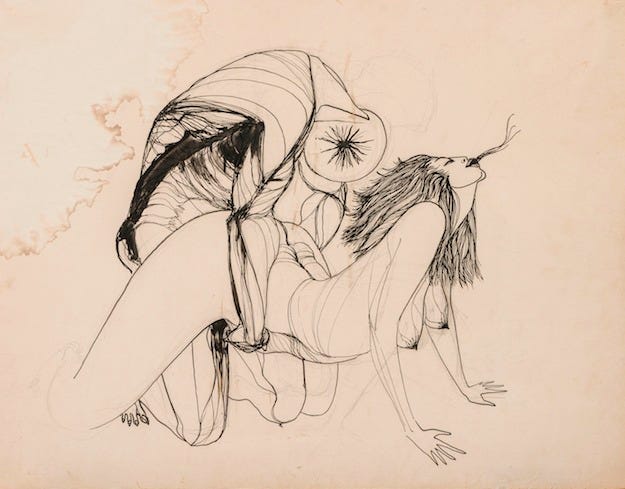
Meanwhile, preeminent 20th-century occult artist Marjorie Cameron opened her own doors of perception through peyote and her associations with another fascinating LA occult figure, Jack Parsons. In a 1980s interview with art historian Sandra Leonard Starr, Cameron discussed how LA didn’t have much in the way of a visual arts scene in the '40s, despite a flourishing contemporaneous appreciation of jazz, followed by poetry in the '50s. (And, of course, a film industry.) But visual arts, at least in terms of galleries, were a tough sell in LA. Cameron felt its effects firsthand: her drawing, Peyote Vision, shut down the famous Ferus Gallery on its opening night in 1957. It’s now clear that Cameron was among the first to really say it was OK to make art for art’s sake in LA, all while staying true to your own personal philosophy.
Since Cameron, there has been a steady supply of spiritually-inclined Angelenos who are either natives or have come to LA to work as visionary artists, from designing album covers and rock posters to making experimental films, to painting in their own backyards while taking mind-expanding drugs to make their visions real.
Through the visual arts, my “City of the Seekers” column examined the tangled threads connecting spirituality and creativity in Los Angeles, which has always enticed magnetic, charismatic leaders and lost souls alike—luring both seers and seekers to its legendary climate of freedom and promises of ultimate enlightenment. I look forward to rescuing the articles from digital decay and obsolescence in order to share with you here.
This article was previously published on VICE and has been modified for republication. All written work © Tanja M. Laden.